Cases
Open processes, not finished monuments.
Lafkenche Law
- Context
- The conflict between the coastal edge, the rights of Indigenous peoples and productive activity, mid-process and with actors who did not share a diagnosis.
- Problem
- Each actor read the conflict through their own legal and territorial frame. There was no analysis of the whole system that would let them discuss the same object.
- Intervention
- Systemic analysis of the conflict: the regulatory, institutional and discursive fabric, the actor map, and the trajectories each alternative opened or closed.
- Result
- An analytical product delivered and used in the real process, not an archived report.
Proof Delivered and working
The full case — thesis, evidence, signals and convergences — on the Atalaya demo dashboard (in Spanish).
There are live engagements that cannot be published yet: cases with an active client are documented when the client authorises it, not before.
We read the signal, open up possibilities and decide in time
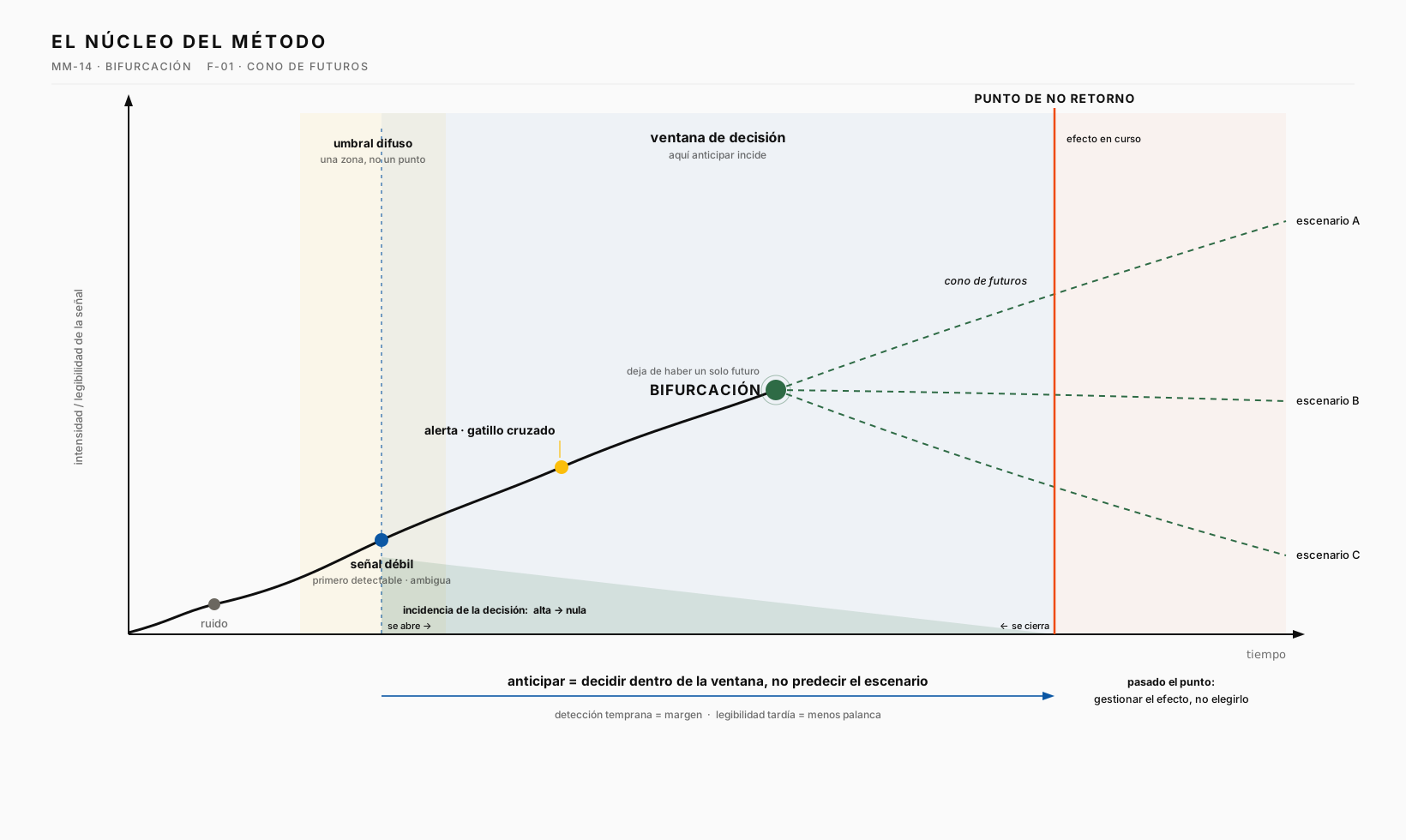
The four stages correspond to a precise point on the diagram: detect the change, set the threshold that forces a review, recognise the fork, and act inside the window where the decision can still alter the outcome.
- 01
Locate the signal
We read the territory, the rules and the actors to tell a relevant change apart from noise.
On the diagram signal
- 02
Set the threshold
We agree in advance what would have to happen to revisit a decision, and turn that condition into an alert that fires when it is crossed.
On the diagram fuzzy threshold
- 03
See the fork
We make comparable the alternatives, tensions and futures that business as usual does not yet let anyone see.
On the diagram fork
- 04
Decide inside the window
We set criteria, owners, alerts and conditions to act or revisit before the point of no return.
On the diagram decision window
Anticipating is not predicting the scenario: it is deciding while the decision still counts. Past the point of no return, what is left is managing the effect, not choosing it.
The four stages are four links in a longer chain. Each glyph says what happens to the field: turquoise for what is observed, orange for what crosses into alert and blue for what gets decided.
- Signal
- Chain
- Threshold
- Convergence
- Fork
- Trajectory
- Scenario
- Implication
- Decision
- Experiment
- Learning and adjustment
- Observation
- Alert
- Decision